One of the biggest mistakes in modern technology is assuming we understand the full value of data at the moment it is created.
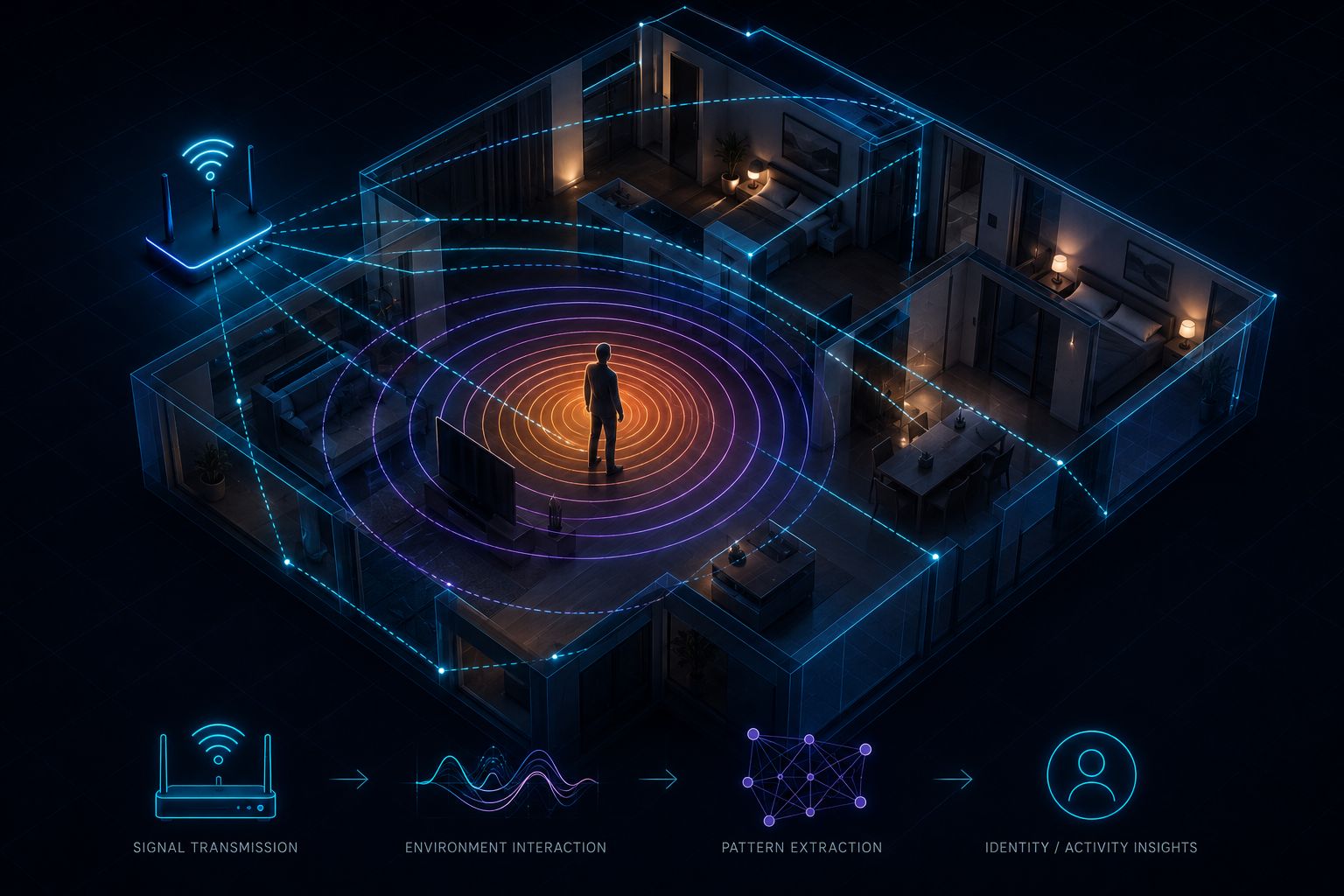
Wi-Fi was built to connect devices to the internet, but can now identify people, monitor breathing, detect occupancy, track movement through walls, and distinguish individuals by their gait. Beamforming and channel-state-information analysis are new techniques applied to existing router data and telemetry.
Your mobile phone was a tool to “call someone from anywhere”, and is now one of the most sophisticated data collection platforms ever created. The most valuable part of your smartphone is not the phone — it is the smart, the data it generates.
The technology and telemetry changed very little, but our ability to extract and analyse information from the signal changed dramatically within the same timeframe.
Technologies are deployed → data accumulates → better analytics emerge.
“Harvest now, decrypt later” can be accompanied by “harvest now, analyse later”.
Emerging analytics are now also supplemented by AI and advanced machine learning, solidifying this macro trend of developing novel analytics use cases within existing datastreams.
The implication for new builders, engineers, architects, and security practitioners is that we need to think more from first principles. Don’t think in terms of applications or products, but in terms of the underlying signal and physics.
An electromagnetic field was once considered a transport mechanism; disruptions in that field can now be used as a sensor. A smartphone was once a communication device; now it is a behavioural model.
The challenge is that privacy, security, and system design are often built around what a technology was intended to and must do, but give less thought to what it could become. Technology rarely changes as fast as our ability to interpret the data it produces.
Now we think about the data we collect, but more seldom about what the true depth of that data is against future tech.