Your AI workflows might be getting sharper, but your brain is getting softer.
I introduce the Brain–AI sandwich.
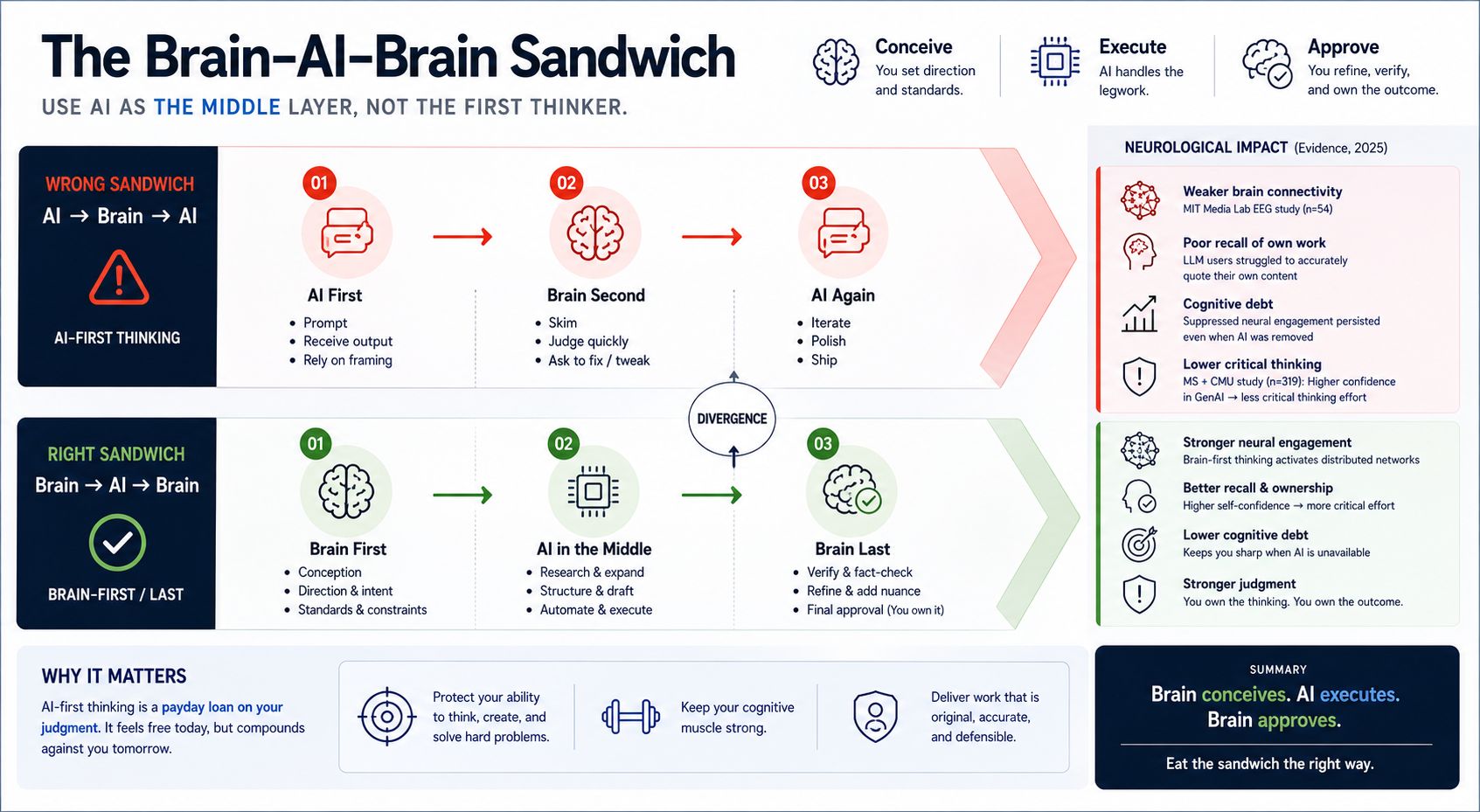
Most AI users go: AI → Brain → AI. Prompt something. Skim it. Ask AI to fix it. Ship. The result tastes fine, but you didn’t make it — you assembled it.
I strongly evangelise for your sandwich to be inverted:
Brain → AI → Brain. Brain conceives. AI does the legwork. Brain approves. The bread is yours. The filling is the model’s.
My reasoning is completely neurological.
MIT Media Lab, 2025. Researchers put 54 people on EEG while they wrote essays across multiple sessions, splitting them into three groups: brain-only, Google, and ChatGPT. The ChatGPT group showed the weakest brain connectivity of the three; the brain-only group had the strongest, most distributed networks. LLM users also struggled to accurately quote their own work.
When researchers later took the AI away from the ChatGPT group, their neural engagement stayed suppressed. The paper coined the term “cognitive debt” — a short-term ease, long-term decline.
Microsoft + Carnegie Mellon, 2025 showed the same pattern from the other direction. They surveyed 319 knowledge workers and found that higher confidence in GenAI was associated with less critical thinking effort, while higher self-confidence was associated with more. The researchers warned that mechanising routine cognition leaves users “atrophied and unprepared” when the real exceptions arrive.
AI-first thinking is a near-invisible tax on your capabilities. It feels free today, but is stealthily compounding against you.
Brain-first and brain-last protects the muscle that actually pays you; brain-last protects the work that goes out with your name on it. AI in the middle handles the labour, while protecting the asset.
Build and eat your sandwiches accordingly. 🥪